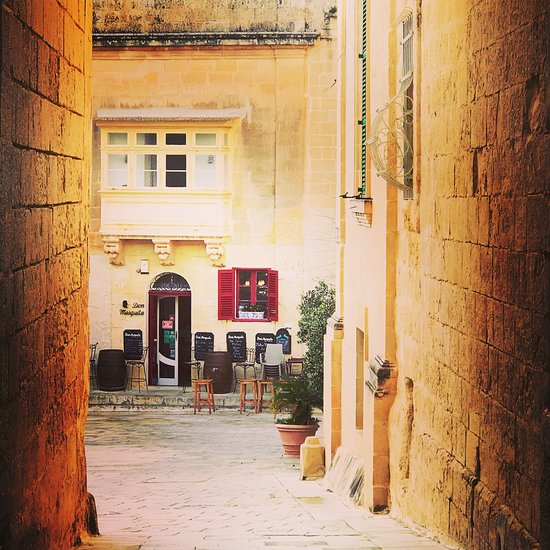

There is a particular kind of restaurant that lends its name to its surroundings — or borrows the surroundings' name for itself, depending on which came first. In Mdina's case, Don Mesquita and Pjazza Mesquita share a name. The square is small, the restaurant anchors it, and the address is one of the most recognisable in the Silent City for anyone who has dined inside the walls.
Mdina has three kinds of dining: the formal palazzi (think tasting menus and candlelight), the open bastion terrace at Fontanella, and the square-anchored mid-tier where Don Mesquita sits — proper sit-down service, a Maltese-Mediterranean kitchen, casual outdoor seating on a small medieval plaza. It is the restaurant most travellers default to when they want a real lunch inside Mdina without committing to a formal palace dining room.
The restaurant on a named square
Mdina's geography is a lattice of narrow streets connecting larger spaces. The main artery is Triq Villegaignon, which runs from the Main Gate northwards toward the bastions. Off Villegaignon, smaller streets and squares branch out — and Pjazza Mesquita is one of them, a quiet plaza that opens just before you reach the heart of the city near St. Paul's Cathedral.
The square is not large. A few small frontages line it, the limestone is honey-coloured, the noise of the day-tripper streams of Triq Villegaignon fades a few steps in. And Don Mesquita's tables spill out into it — the restaurant occupies the most visible frontage on the plaza, and the outdoor seating is the plaza, in practice, for most of the daylight hours.
The plaza as the dining room
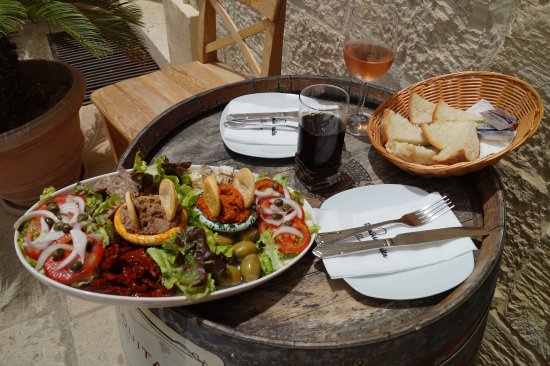
Outdoor tables on Pjazza Mesquita, framed by Mdina's honey-coloured limestone. Indoor seating sits in the stone-walled dining room behind the frontage; the kitchen runs lunch and dinner from the same room.
Whether the square named the restaurant or the restaurant named the square is the kind of question Mdina invites and rarely answers. Names in the Silent City travel through centuries — the Mesquita surname appears in Mdina's historical records, traces of Spanish, Portuguese and Knights-of-St-John connections that ran through the city as Malta passed between empires. The pragmatic reality for today's visitor is simpler: the square is real, the restaurant occupies it, and the address is its own landmark.
Setting: dining inside the Silent City

The phrase "Silent City" is not a tourism slogan — Mdina was Malta's capital before Valletta, and its small, fortified, car-free interior has earned the nickname through actual quiet. Cars are forbidden inside the walls. The population is a few hundred. After the last day-trippers leave in the late afternoon, the city empties into something close to medieval silence — limestone, footsteps, occasional bells.
Dining inside Mdina has a particular texture because of this. There is no street noise. No traffic. The conversation at the next table is not lost in a passing motorbike. At Don Mesquita, the soundtrack of dinner is the soft echo of voices bouncing off bastion-grade stone, with the occasional Mdina cat passing through the square.
- Outdoor seating on Pjazza Mesquita — the natural choice in spring, summer and autumn. Limestone walls cool the square in the evening, and the angled light catches the stone in late afternoon.
- Indoor dining room — stone-walled, atmospheric, the right choice in winter or on the wettest days when Mdina's wind picks up.
- Both run the full menu — there is no abbreviated outdoor card. The same kitchen serves both, and the same wine list works for both rooms.
The kitchen: Maltese-Mediterranean dining
Don Mesquita's menu sits in a category that Maltese dining does particularly well: the unforced Maltese-Mediterranean middle ground. It is neither the cheap-eats tier of pastizzi stands and ftira sandwiches nor the formal end of tasting menus and palazzo dining. It is the bracket where you sit down for an hour, order two courses and a glass of wine, and pay a moderate bill (€€).
The cooking draws on Malta's twin traditions:
- The Maltese side — traditional platters (gbejniet, sun-dried tomatoes, capers, olives, bigilla, Maltese sausage), the rabbit stew (fenkata) that is Malta's most defining dish, ftira open sandwiches, the local takes on pasta with ravjul (Maltese ravioli stuffed with gbejna and ricotta).
- The Mediterranean side — pasta classics, pizza from the wood oven where available, grilled meats and fresh fish, salads built around tomato, olives, basil and capers — the broad vocabulary of Mediterranean cooking that Malta shares with Sicily, Southern Italy and the Maghreb.
The kitchen is neither aspirational fusion nor strict regional purity. It is the casual, well-executed centre of what Maltese diners themselves eat day to day — and what a visitor who wants to understand real Maltese cooking, rather than the museum version, would benefit from ordering.
What to order
The menu rotates with the season and the kitchen's mood, but a few orders consistently make sense at Don Mesquita.
🧀 Maltese Platter
The single dish that captures Maltese cuisine in one assembly. Expect gbejniet (fresh and peppered sheep's-milk cheeselets), bigilla (broad-bean dip), Maltese sausage, sun-dried tomatoes, capers, olives and ftira bread. Designed for sharing as a starter for two or as a light lunch on its own.
🐰 Fenkata (Maltese Rabbit Stew)
Malta's national dish, when on the menu. Rabbit slow-cooked with garlic, red wine, bay leaves and tomato until the meat falls away from the bone. Traditionally served as two courses — pasta tossed with the cooking sauce first, then the rabbit itself with potatoes. Ask about the day's preparation; some kitchens serve a single-plate version, some the full two-course presentation.
🍝 Ravjul (Maltese Ravioli)
House-made pasta parcels filled with gbejna (sheep's-milk cheese) and ricotta, typically served in a fresh tomato sauce or with butter and sage. The most Maltese pasta dish on the menu — pasta is shared with Italy, but the filling is unmistakably local.
🐟 Fresh Fish of the Day
Malta's fishing fleet keeps Mdina's restaurants in good seasonal fish — sea bream, sea bass, dentice and the autumn lampuki (dorado/mahi-mahi) run that defines September and October on the island. Grilled, simply dressed with olive oil and lemon.
🍷 Local wine
Maltese wines deserve attention. The native Gellewza (red) and Girgentina (white) grapes appear on better Maltese wine lists. Marsovin, Meridiana, Delicata and Camilleri are the main producers. A glass of local white with the Maltese platter is the order that ties the meal together.
Pairing Don Mesquita with a Mdina walking tour
The most rewarding way to visit Don Mesquita is as the midpoint of a Mdina walking visit, not as a destination on its own. A common itinerary:
- Enter through the Main Gate. The arched entrance featured in Game of Thrones (King's Landing, season one). The bridge over the moat dates from the Knights' refortifications after the 1693 earthquake.
- Walk Triq Villegaignon. Mdina's main pedestrian street. Palazzi line both sides; wrought-iron balconies, limestone facades, the occasional cat.
- Visit St. Paul's Cathedral. Designed by Lorenzo Gafà in the 1690s after the earthquake. Free to enter the square; the cathedral itself has a small admission fee that includes the museum.
- Slip into the side streets. The smaller alleys reveal courtyards, palazzo entrances and views you miss on the main route. Pjazza Mesquita is one such pocket — duck off Triq Villegaignon and you find it.
- Settle at Don Mesquita. Lunch (12:00–14:30) or an early dinner. Allow at least an hour at the table.
- Walk to the bastions. After lunch, head to Mdina's northern wall for the view. Fontanella is there if you want cake and coffee with the panoramic view.
- Exit toward Rabat. Mdina opens onto Rabat, where the catacombs and parish church are within five minutes' walk.
For a deeper Mdina visit, our Mdina Guide covers the full circuit. For Mdina dining specifically — including the formal palazzi and the bastion cafe — see the Mdina Dining Guide.
How to visit
Address & contact
- Location: Pjazza Mesquita, L-Imdina MDN 1080, Malta
- Phone: (+356) 2702 6640
- Social: facebook.com/donmesquitamdina
- Restaurant page: Don Mesquita on HubpyMalta
Getting there
- By car: Park at the Mdina Main Gate / Rabat parking area. Mdina is pedestrian-only inside the walls; the walk from car park to Pjazza Mesquita is about 5–8 minutes.
- By bus: Routes 51, 52, 53, 56 and 186 stop at the Mdina/Rabat terminus.
- From Valletta: approximately 25–35 minutes by car or bus.
- From Sliema / St. Julian's: approximately 30–45 minutes.
When to go
- Lunch (12:00–14:30): the natural pairing with a Mdina morning walking tour.
- Late afternoon: Pjazza Mesquita catches the warm golden light against the limestone — best time for outdoor seating.
- Dinner: quieter, more atmospheric after the day-trippers leave. Booking recommended on weekends.
- Avoid peak midday in July/August for outdoor seating — head inside or shift to early evening when the square cools down.
What to order
- For a single dish: the Maltese Platter, plus a glass of local white.
- For a full lunch: Maltese Platter to share, then ravjul or fenkata, finish with a coffee.
- For a fish-focused meal: ask for the fish of the day, grilled, with vegetables.
- For a quick stop: a glass of wine and a starter on the outdoor terrace.
Get the Malta Food Insider
One email a month with new openings, hidden gems and seasonal menus across the island. No spam, unsubscribe anytime.
Frequently asked questions
Where is Don Mesquita in Malta?
On Pjazza Mesquita, the small square inside Mdina — Malta's fortified medieval capital, the Silent City. A short walk from the Main Gate and a couple of minutes from St. Paul's Cathedral.
What is Pjazza Mesquita?
One of Mdina's smaller named squares — a quiet plaza opening off the main pedestrian routes. The restaurant shares the square's name and occupies its most visible frontage, with outdoor seating that takes up most of the plaza.
How do I get there?
Mdina is car-free inside its walls. Park at Mdina/Rabat, enter through the Main Gate, follow Triq Villegaignon and turn off into the side streets — Pjazza Mesquita is signposted. Bus routes 51, 52, 53, 56 and 186 serve the Mdina/Rabat terminus.
Do I need to book?
Weekday lunches usually walk-in friendly. For weekend dinners and warm summer evenings, calling ahead on (+356) 2702 6640 is recommended — the outdoor seating fills up first.
What kind of food does the kitchen serve?
Maltese and Mediterranean — pasta, grilled meats, fish, traditional Maltese platters and local specialities like ravjul and fenkata. Moderate pricing (€€), sit-down service.
Is it family-friendly?
Yes. The casual square setting, traditional menu and outdoor seating make Don Mesquita comfortable for families. The menu has enough familiar pasta/pizza options alongside the Maltese specialities.
What time of day is best?
Lunch pairs naturally with a Mdina morning walking tour. Late afternoon and early evening turn Pjazza Mesquita into golden-light territory. Dinner is quieter once day-trippers leave.
How does it compare to Fontanella?
Different propositions inside the same city. Fontanella commands the bastion edge — terrace seating, panoramic view, the famous chocolate cake. Don Mesquita anchors a square inside Mdina — proper sit-down service, Maltese-Mediterranean kitchen, the casual atmosphere of plaza dining. Many travellers do both in one Mdina visit.
How long should I plan?
An hour at the table for lunch, longer for a leisurely dinner. Combined with a Mdina walking tour, allow 2–3 hours for the full visit including the meal.
Can I see the menu in advance?
Yes — use the See Full Menu button above to view the current menu and prices on the restaurant's official entrtn.com page.